

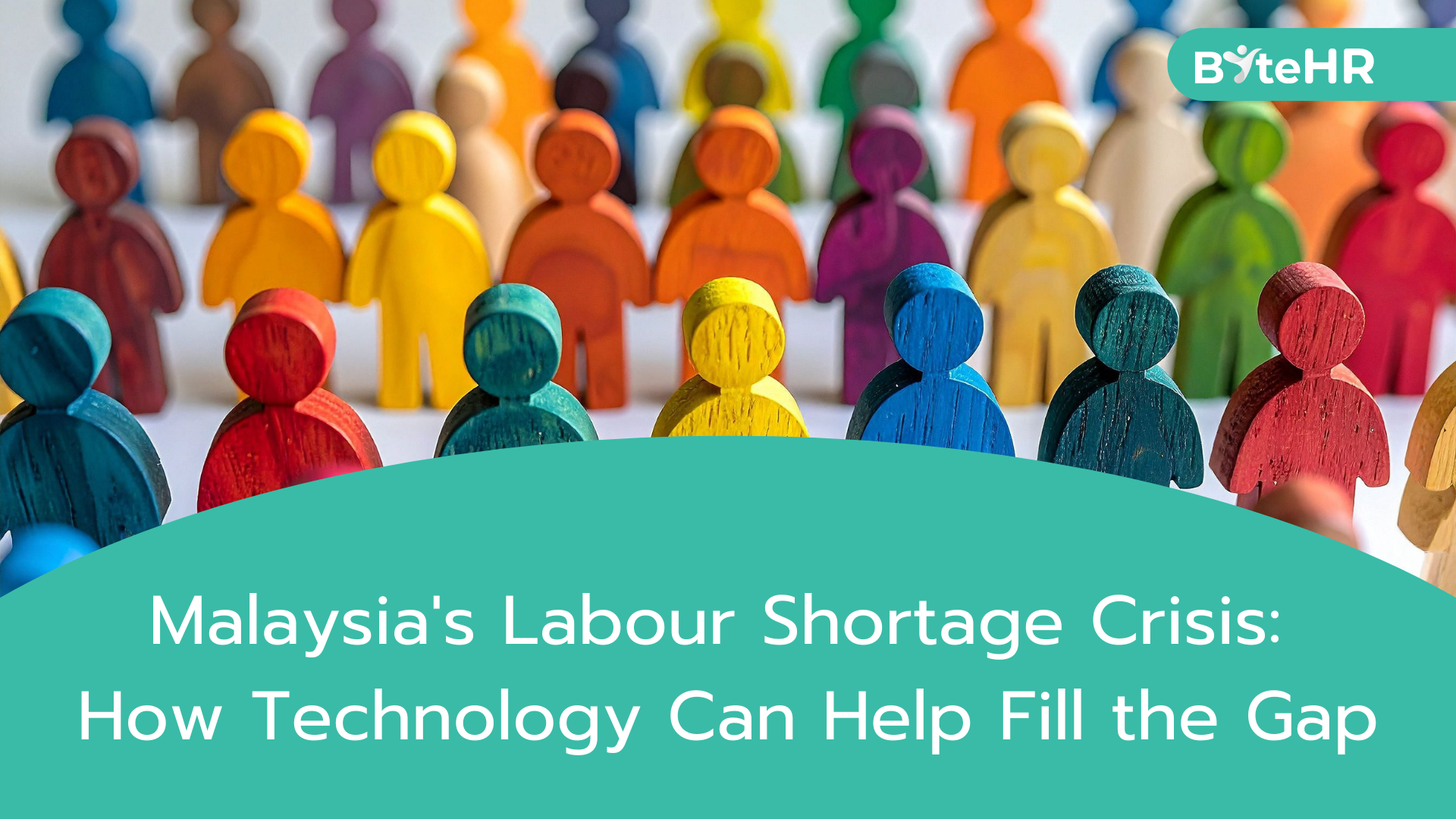
Malaysia's Labour Shortage Crisis: How Technology Can Help Fill the Gap

Malaysia's labour shortage is not a new problem, but it is a worsening one. Across manufacturing, construction, hospitality, agriculture, and retail, employers are struggling to find and retain enough workers to meet operational demand. The Department of Statistics Malaysia has consistently reported vacancy rates that outpace the supply of available workers in key sectors, and the situation shows no sign of resolving itself through traditional hiring methods alone.
The causes are well documented. An ageing workforce, the emigration of skilled Malaysian talent to higher-paying markets like Singapore and Australia, heavy reliance on foreign workers whose entry and exit is subject to policy fluctuations, and a growing mismatch between the skills graduates bring and the skills industries need have all contributed to a labour market under persistent pressure.
For business owners and HR managers, the day-to-day reality of this shortage is felt in unfilled shifts, overworked permanent staff, rising overtime costs, and a recruiting cycle that never seems to end. The question is no longer whether Malaysia has a labour shortage. The question is what businesses can do about it, and increasingly, the answer points toward technology.
The Real Cost of the Shortage
Before looking at solutions, it is worth understanding the full cost of labour shortage to a business, because it goes well beyond the obvious gap on the roster.
When teams are understaffed, the employees who remain absorb the additional workload. Over time this leads to burnout, reduced productivity, and higher turnover among the very people a business most needs to keep. In Malaysia's F&B and hospitality sectors, where turnover already regularly exceeds 30%, this creates a self-reinforcing cycle where shortage leads to overwork, overwork leads to resignation, and resignation deepens the shortage.
There is also the cost of inefficiency. When HR teams are spending the majority of their time on manual administrative tasks such as processing paper leave forms, reconciling attendance spreadsheets, and re-entering payroll data, they have little capacity left for the strategic work of recruitment, workforce planning, and talent development. The shortage is partly a numbers problem, but it is also a capacity problem in how businesses manage the people they already have.
How Technology Addresses the Shortage
Technology does not conjure workers from thin air, but it does two things that directly help businesses operate effectively despite a tighter labour market. It makes existing staff more productive by removing administrative friction, and it gives HR teams the tools to recruit, onboard, and retain people more effectively.
Automating repetitive HR tasks is the most immediate win. When payroll calculations, leave approvals, attendance tracking, and document generation are handled by an integrated HR system, the hours that HR staff previously spent on manual processing are freed up for higher-value work. A team that was spending three days a month reconciling overtime records can redirect that time toward improving the candidate experience, building employee development programs, or analysing turnover patterns to understand why people are leaving.
Faster onboarding through digital tools directly addresses one of the most frustrating aspects of high-turnover industries. When a new hire joins, every day they spend waiting for paperwork, system access, or orientation materials is a day they are not yet productive. Digital onboarding through an HR platform allows employment contracts to be signed electronically, orientation materials to be accessed via mobile, and employee profiles to be created in minutes rather than days. In sectors where the gap between offering someone a job and getting them on the floor matters operationally, this speed is genuinely valuable.
Workforce planning and data analytics help businesses anticipate shortages rather than react to them. When attendance, leave, and headcount data are centralized in a cloud HR system, managers can identify patterns such as departments that consistently run understaffed on certain days, roles with disproportionately high turnover, or periods of the year when leave demand peaks. With this visibility, businesses can plan hiring timelines, cross-training programs, and shift structures proactively rather than scrambling to fill gaps at the last minute.

Retaining the Workers You Have
In a tight labour market, retention is as important as recruitment and often more cost-effective. Research consistently shows that replacing an employee costs significantly more than retaining one, when recruitment fees, onboarding time, and the productivity dip during a new hire's settling-in period are all factored in.
Technology supports retention in ways that are practical and measurable. When employees can access their own payslips, check leave balances, and submit requests through a mobile app, their day-to-day experience of working for the company improves. Transparency around pay, particularly overtime and shift allowances, reduces one of the most common sources of workplace grievance. And when payroll is accurate every month, the silent trust that employees place in their employer is reinforced rather than eroded.
For Malaysian businesses managing a mix of local and foreign workers, an HR platform that handles the documentation requirements for both groups from a single system reduces administrative burden significantly and ensures compliance with the relevant permit and contribution requirements.
The Competitive Dimension
Malaysia's labour shortage means that workers have more choice than they did a decade ago. They can and do compare employers, and the companies winning the talent competition are increasingly those that offer not just better pay but a better working experience. Digital HR tools, self-service portals, and transparent payroll systems are no longer just operational conveniences. They are signals to potential and current employees that the business is well-run and takes its people seriously.
For SMEs competing against larger employers with more resources, technology levels the playing field. A well-implemented cloud HR system gives a 50-person business the same administrative efficiency and employee experience capability as a company ten times its size.

Malaysia's labour shortage will not be solved by technology alone. Policy changes, education reform, and wage competitiveness all have a role to play. But for individual businesses navigating the shortage today, technology is the most immediately actionable lever available.
Reducing administrative burden, speeding up onboarding, improving retention through better employee experience, and enabling data-driven workforce planning are all within reach for Malaysian businesses of any size. The companies that invest in these capabilities now will be better positioned to attract and retain talent as the competition for workers continues to intensify.
For more on HR development, tax knowledge, and tips for employees and entrepreneurs, follow ByteHR. If you're considering HR software, contact ByteHR for a free consultation at 036 419 5276 or salesmy@byte-hr.com.