


5 Steps Malaysian SMEs Must Take Before Processing Payroll!

Think about this: It is nearly the end of the month. The payroll summary and calculations are still pending final confirmation. How would the HR Teams feel when rushing to finalise the figures? Often, panic and worry arise from the possibility of rejections, miscalculations, or even employee conflict. Therefore, pre-payroll is critical to ensure all numbers follow LHDN, EPF, and PERKESO guidelines before proceeding with final bank transfers. Below is a 5-step checklist every HR team can use to maintain accurate monthly salary payouts!
Step 1: Reviewing Timesheets & Attendance
Before approving any payouts, review timesheets and attendance records across the company to clear out all human errors and anomalies. Double-checking these documents also allows HR teams to address missing punches, unverified overtime claims, and unattended shifts before moving to the final timesheet. To ensure an accurate review, unpaid leave (or no-pay leave) should adhere to the Employment Act 1955 based on the formula: monthly salary divided by 26 x unpaid days to determine the exact daily rate deductions.
Additionally, part-time and shift work settings (e.g. hourly/ part-time workers) should meet minimum wage calculations. Based on Malaysian Law, the minimum wage threshold is now RM1,700 for shift workers with a full-time schedule. Note that this threshold excludes any additional allowances or incentives. Part-time or hourly workers' total payout should be equal to or exceed the minimum wage floor of RM8.72 per hour multiplied by the hours worked. As for daily-rated staff, here are some references to be legally compliant:
6-day week: RM65.38 per day.
5-day week: RM78.46 per day.
4-day week: RM98.08 per day
Step 2: Approving Pending Requests
With the reviewed numbers, this stage addresses the next key factors that may affect the final payout. One important factor includes auditing Overtime (OT) multipliers for employees working beyond the default schedule. For a more complete breakdown of such calculations, kindly refer to this article. A straightforward categorisation includes:
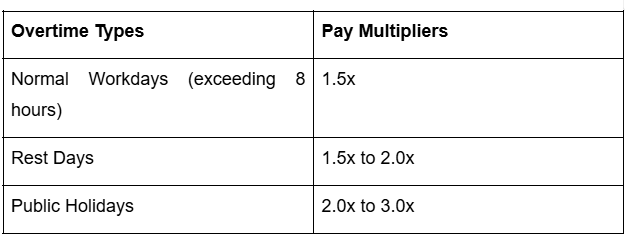
Table 1: OT multiplier types.
Besides OT multipliers, expense claims are another crucial segment to divide into two categories: tax-deductible claims and taxable employee perks. Differentiating these claims helps Malaysian SMEs avoid underreporting taxable gross income when filing taxes. This table shows how different expenses fall under these two categories following LHDN rules:
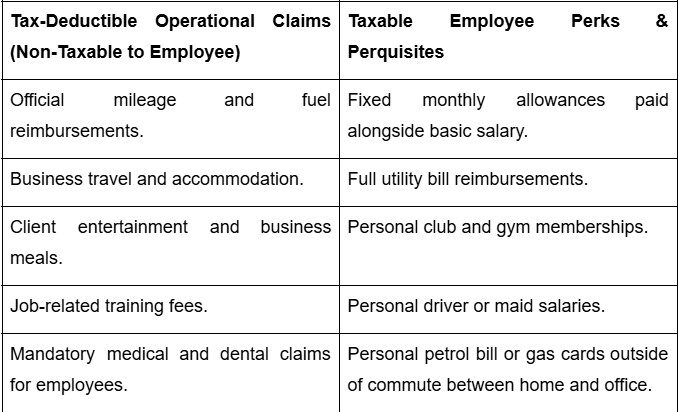
Table 2: Taxable and non-taxable expenses.
Based on the expense categories above, LHDN do offer tax-exempt perks on specific categories shown here:
Petrol and travel allowances for official duties up to RM6,000 per year.
Childcare allowances exempted up to RM3,000 per year.
Non-cash Benefit-In-Kind (BIK) is fully tax-exempt for up to 1 unit per category of asset (for mobile phones, laptops and tablets).
Parking allowances are fully exempt whether paid directly to parking operators or reimbursed to staff.
Long service and innovation awards can be tax-exempt up to RM2,000 per year for recognition-related awards.
With these categorised tax-exempt perks, HR teams may set strict cut-off dates (final week of every month) to enforce a deadline, ensuring there are no last-second adjustments before the final submission. For a smoother automated process of finalising attendance and spreadsheet-related tasks, HR teams can also incorporate HR systems into daily workflows, as systems like ByteHR offer attendance management features as a time-efficient method before processing payroll.
Step 3: Uploading Variable Components
The next stage involves managing commissions and allowances, as it is important to distinguish fixed contractual allowances from variable incentives such as sales and commissions. Fixed contractual allowances remain fixed each month as part of the core wage structure, while sales commissions, performance add-ons, and other incentives are expected to fluctuate. Look at how these fluctuations could impact these statutory deductions:
EPF (KWSP): Mandatory for both fixed allowances and sales incentives.
SOCSO & EIS (PERKESO): Follows the monthly statutory deductions up to the RM6,000 ceiling gap, with commissions and performance allowance acting as a top-up from the base salary.
Monthly Tax Deduction (PCB/ MTD): Variable commissions are viewed as additional remuneration under LHDN rules. These additional payouts can be calculated using LHDN’s annualisation method calculator to determine the final tax rate. This prevents over- or under-taxation in the future.
To ensure formatting consistency, HR teams should use a structured CSV or Excel upload flow for easier access before executing the final payout.
Step 4: Uploading Employee Master Profiles
Managing employee master profiles after sorting out the statutory deductions is a crucial step before wrapping up. Updating employees’ data minimises miscalculations in taxation or submission rejections. There are 3 components to complete the master profile for SME companies.
Component 1: New Joinees & Offboarding Adjustments
Make final confirmations of joining and exit dates to summarise basic salaries accurately. For new employees, all essential information (EPF, SOCSO, EIS and LHDN TIN numbers) is correctly documented, while exiting employees must confirm their statuses, notice periods and final payout before officially leaving the company.
Component 2: Form TP3 & Form TP1 Management
Here are the exact tasks to be completed for both forms:
Form TP3 (Previous Employment History): A mandatory submission for new joiners (especially the middle of the year) who came from another employer to capture previous accumulated earnings, EPF deductions, and PCB history to prevent under-deducting monthly tax (PCB/MTD). The submission window should be immediately after joining the company under 2 conditions: They joined the company mid-year (any month after January), and they earned taxable income, had EPF contributions or had PCB/MTD deducted by the previous company in the same year.
Form TP1 (Monthly Tax Relief Claims): Collect the newest Form TP1 submissions from existing employees eligible for monthly tax relief claims (e.g. lifestyle, childcare and lifestyle). Entering these deductions into the payroll engine monthly helps maintain a consistent PCB deduction without employees waiting for annual tax refunds. TP1 should be submitted at any point throughout the year before the company’s monthly payroll processing cut-off date when life events happen (e.g. childbirth, marriage, education fees, etc.).
Component 3: Minimum Wage Compliance Check
As mentioned, the basic salary has a minimum threshold of RM1,700 per month. According to Malaysian law, fixed allowances or any variable incentives cannot be justified as part of this basic threshold, as the basic pay itself must be equal to or exceed RM1,700.
Step 5: Final Pre-Submission Checks
Before final payroll processing happens, HR teams must conduct a pre-submission audit to confirm the data accuracy. There are three details to look for:
Statutory Cap Verification:
Compare statutory deductions to ensure they reflect the current PERKESO contribution tables. Confirm the final monthly wage ceiling cap for high earners is adjusted to RM6,000 for SOCSO and EIS calculations. With this confirmation, high-earning staff are capped at the correct maximum statutory limit (RM104.15 for employers / RM29.75 for employees in SOCSO; RM11.90 from both parties in EIS).
Bank File & Formatting:
Run pre-submission formatting checks on bank batch files before uploading to the corporate banking portal. Double-check that account numbers, beneficiary names, and batch layouts adhere to Electronic Funds Transfer (EFT) formats to avoid rejections or delays.
Variance Reporting & Audit:
Generate a variance report comparing gross liabilities with the previous payroll records. Through these reviews, HR teams can identify duplicated entries, miscalculated OT payments, or unverified payouts, especially for variable incentives before the final bank execution.
Conclusion
A structured pre-payroll workflow may be time-consuming, but once established, it can become a predictable routine, minimising human errors and data inaccuracies. More importantly, with a systematic approach to verify timesheets, approvals, variable earnings, tax records and statutory limits, Malaysian SMEs can maintain strict statutory compliance and protect against bank rejections. Looking forward to making pre-payroll automated? Head over to ByteHR (please contact us via 036 419 5276 or salesmy@byte-hr.com for a consultation) to request a free demo and see how HR systems can be your next step towards worry-free payroll processing!