

The Rise of AI Copilots in Payroll | What HR Teams Need to Know

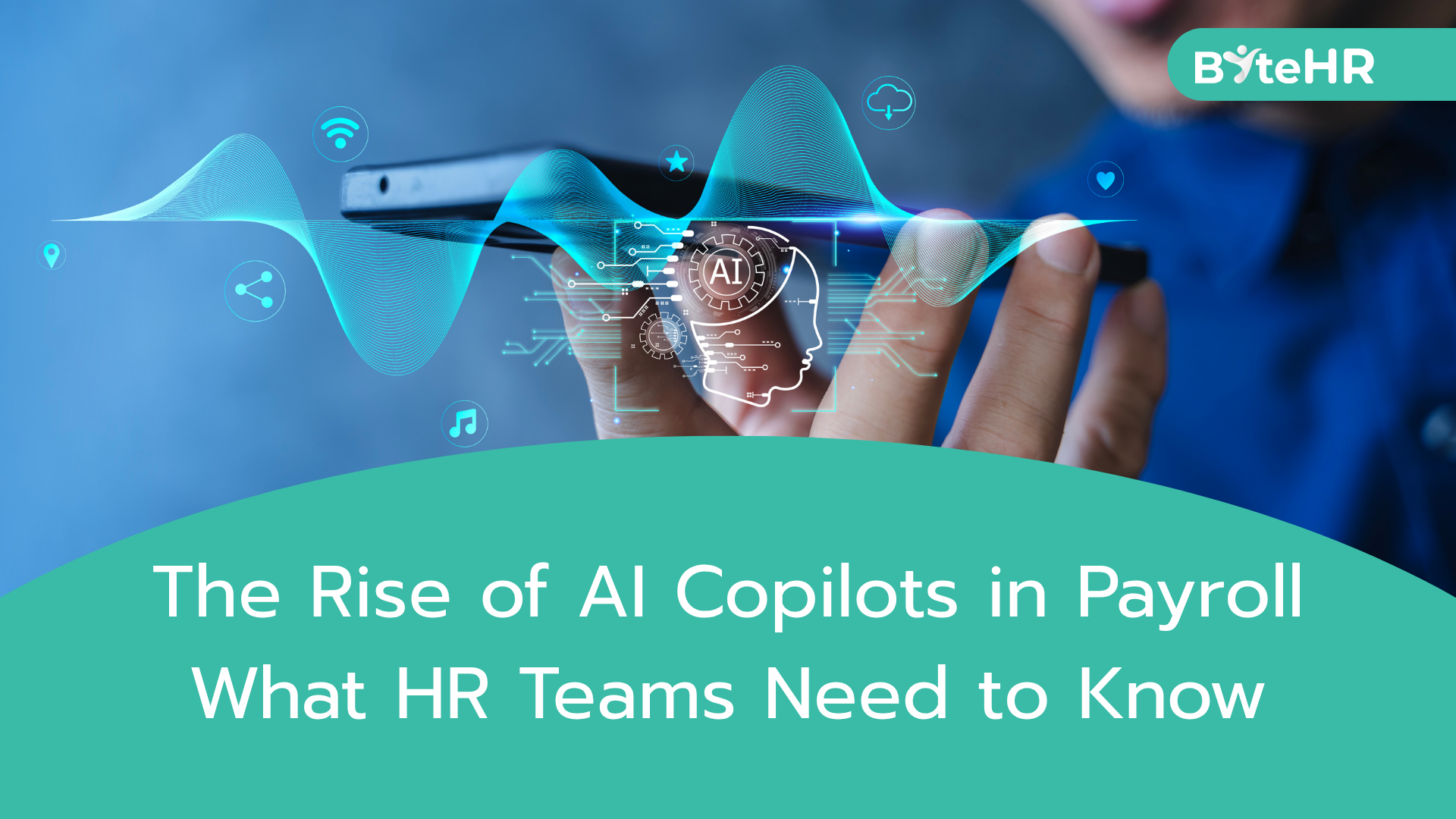
The payroll function has long been one of the most critical yet challenging responsibilities for HR departments. From calculating complex deductions to ensuring regulatory compliance, payroll processing demands precision, timeliness, and unwavering attention to detail. Now, artificial intelligence is revolutionizing this landscape through AI copilots, intelligent assistants that are transforming how HR teams approach payroll management. Understanding what these AI tools can and cannot do is essential for HR professionals navigating the digital transformation of their organizations.
Understanding AI Copilots in Payroll
AI copilots are not fully autonomous systems that replace human oversight. Rather, they function as intelligent assistants that work alongside HR professionals, automating routine tasks, providing real-time insights, and flagging potential issues before they become problems. Think of them as highly skilled digital colleagues that never sleep, never make arithmetic errors, and can process vast amounts of data instantaneously.
These AI systems leverage machine learning algorithms, natural language processing, and predictive analytics to enhance payroll accuracy and efficiency. Unlike traditional payroll software that simply follows programmed rules, AI copilots learn from patterns, adapt to organizational nuances, and continuously improve their performance over time.
AI-Assisted Payroll Processing: Speed Meets Accuracy
The most immediate benefit of AI copilots is their ability to dramatically accelerate payroll processing while maintaining, or even improving, accuracy levels. Traditional payroll processing involves numerous manual steps: data entry, calculation verification, cross-referencing with attendance records, applying policy rules, and generating reports. Each step introduces potential for human error and consumes valuable time.
AI copilots streamline this workflow by automatically extracting data from multiple sources, including time and attendance systems, leave management platforms, and employee records. They apply complex calculation rules instantaneously, accounting for variables such as overtime rates, shift differentials, allowances, bonuses, and various deduction categories. What might take an HR professional hours or days can be accomplished by an AI copilot in minutes.
Moreover, AI systems excel at handling exceptions and special cases. When an employee has irregular hours, takes unpaid leave mid-month, or receives a one-time bonus, the AI copilot recognizes these variations and adjusts calculations accordingly. This adaptability reduces the need for manual interventions and special handling that traditionally slow down payroll cycles.
Natural language processing capabilities enable some AI copilots to understand and respond to queries in plain language. HR staff can ask questions like "What will the total payroll cost be if we give all employees a 3% raise?" and receive instant, accurate projections. This conversational interface makes complex payroll analysis accessible even to team members without deep technical expertise.
Error Detection and Compliance Monitoring
Perhaps the most valuable contribution of AI copilots is their ability to detect errors and compliance issues that human reviewers might miss. Payroll errors can be costly, not just financially but also in terms of employee trust and regulatory penalties. AI systems serve as an always-vigilant safety net, catching mistakes before payroll is finalized.
AI copilots employ multiple layers of error detection. First, they perform logical consistency checks, flagging anomalies such as unusually high overtime hours, duplicate payments, or salary amounts that fall outside expected ranges. Second, they cross-reference current payroll data against historical patterns, identifying deviations that might indicate data entry errors or system glitches. Third, they validate calculations against regulatory requirements, ensuring that tax withholdings, statutory contributions, and mandatory deductions are computed correctly.
Compliance monitoring is particularly crucial given the complex and ever-changing nature of labor laws and tax regulations. AI copilots can be updated instantly when regulatory requirements change, ensuring that payroll calculations always reflect the latest rules. They track compliance across multiple dimensions: minimum wage requirements, overtime regulations, leave entitlements, tax brackets, and statutory contribution rates.
Some advanced AI systems even provide predictive compliance alerts. For example, if an employee is approaching the annual earnings threshold that triggers different tax treatment, the AI copilot can notify HR in advance, allowing for proactive planning rather than reactive corrections.
The audit trail capabilities of AI copilots also strengthen compliance. These systems automatically document every calculation, decision point, and data source, creating comprehensive records that simplify internal audits and regulatory inspections. This transparency not only ensures accountability but also builds confidence in payroll accuracy.
Data Security Concerns
While the benefits of AI copilots are compelling, they introduce significant data security considerations that HR teams must address thoughtfully. Payroll data is among the most sensitive information an organization handles, including personal identification numbers, bank account details, salary information, and tax data. Entrusting this information to AI systems requires robust security measures.
The first concern involves data access and storage. AI copilots require access to comprehensive employee data to function effectively, raising questions about who controls this data, where it is stored, and how it is protected. Organizations must ensure that AI systems employ enterprise-grade encryption for data both in transit and at rest. Cloud-based AI solutions, while offering convenience and scalability, require careful evaluation of the provider's security infrastructure and compliance certifications.
Data privacy regulations add another layer of complexity. Depending on jurisdiction, laws such as GDPR, CCPA, or local data protection statutes impose strict requirements on how employee data can be collected, processed, and stored. AI copilots must be configured to comply with these regulations, including provisions for data minimization, purpose limitation, and individual rights such as data access and deletion requests.
The risk of data breaches is a paramount concern. If an AI payroll system is compromised, the consequences could be severe, ranging from identity theft and financial fraud to reputational damage and regulatory penalties. Organizations should implement multi-factor authentication, role-based access controls, and regular security audits to minimize breach risks. Additionally, incident response plans should specifically address scenarios involving AI system compromises.
AI algorithms themselves can pose security risks if not properly managed. Machine learning models can potentially be manipulated through adversarial attacks or can inadvertently encode biases present in training data. HR teams should work with AI vendors to understand how models are trained, tested, and monitored for both security vulnerabilities and fairness issues.
Vendor due diligence is essential. Organizations should thoroughly vet AI copilot providers, examining their security track records, compliance certifications, data handling practices, and contractual commitments regarding data ownership and breach notification. Understanding the vendor's business continuity plans and data recovery capabilities is equally important.

Balancing Innovation with Human Oversight
Despite their impressive capabilities, AI copilots should augment, not replace, human judgment in payroll management. Complex employee situations, policy interpretations, and ethical considerations still require human insight. The ideal model combines AI efficiency and accuracy with human oversight and decision-making authority.
HR teams should establish clear protocols for AI copilot usage, defining which tasks can be fully automated, which require human review, and which must remain exclusively human-managed. Regular audits of AI recommendations and decisions help ensure the system performs as expected and allows for continuous refinement.
Training is crucial for successful AI adoption. HR staff need to understand both how to use AI copilots effectively and how to critically evaluate their outputs. This includes recognizing the limitations of AI, knowing when to override automated recommendations, and maintaining the skills necessary to perform payroll functions manually if systems fail.
The Future of Payroll: Human-AI Collaboration
The rise of AI copilots represents a fundamental shift in how payroll is managed. As these technologies mature, we can expect even more sophisticated capabilities, including predictive workforce cost modeling, automated regulatory compliance updates, and seamless integration across all HR functions. However, the core principle remains constant: AI tools are most effective when they empower HR professionals rather than replace them.
Organizations that embrace AI copilots thoughtfully, addressing security concerns while leveraging their efficiency and accuracy benefits, will find themselves better positioned to manage payroll complexities while freeing HR teams to focus on strategic initiatives that drive organizational success.
ByteHR is ideal for organizations seeking simplicity, excellent customer service, and user-friendly functionality. Contact ByteHR today for consultation on digital employment contract management systems and HR solutions that will elevate your human resource management into the digital age.
Want to follow articles about taxes, tips for employees and entrepreneurs, and human resource development? Visit ByteHR. If you're considering an HR program but aren't sure where to start, or whether the features will meet your company's needs, consult with ByteHR for free at 02 026 3297 or email sales@byte-hr.com.