

How to Manage HR Across Multiple Properties in Malaysian Hotel Chains

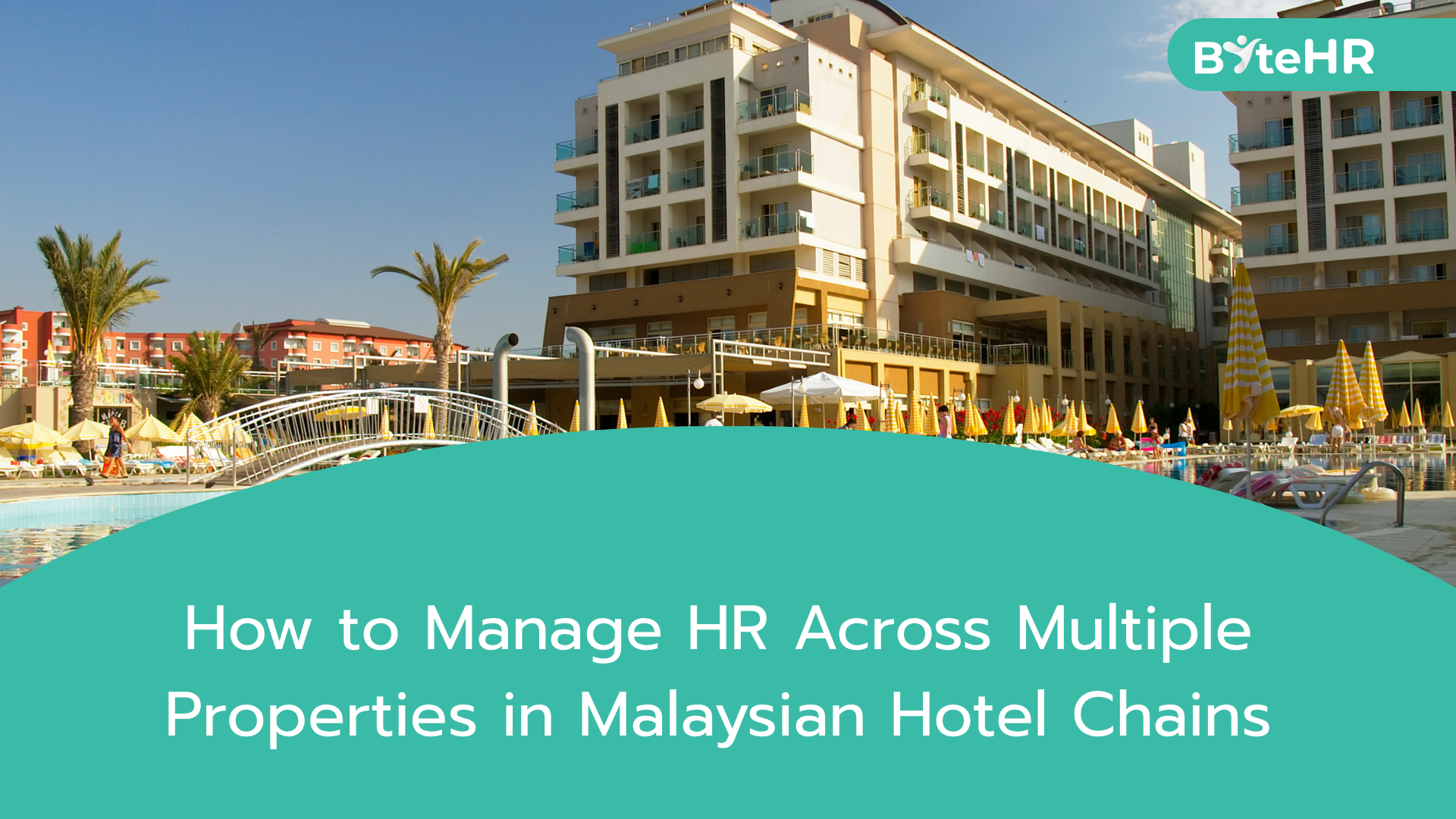
Operating a single hotel property comes with a rigorous set of round-the-clock administrative demands. Scaling that operation across multiple locations, such as managing a flagship luxury hotel in Kuala Lumpur, a heritage boutique property in Penang, and a resort portfolio in Langkawi, transforms human resources into a complex logistical puzzle.
For Malaysian hotel groups, multi-property HR management requires balancing brand-wide consistency with local operational flexibility. When personnel policies, payroll rules, and talent deployment are fragmented across different states, administrative friction quickly drains efficiency and strains management teams.
The Unique Complexities of Multi-Property Hospitality HR
Managing a hospitality workforce across diverse geographical locations involves operational hurdles that standard office-based businesses rarely encounter:
Decentralized Operations: Each hotel property functions as an independent ecosystem with its own front-of-house, housekeeping, food and beverage (F&B), engineering, and guest relations teams. Yet, all departments must strictly adhere to the overarching corporate brand standards and service benchmarks.
High Turnover and Cross-Property Deployment: The hospitality sector experiences dynamic staffing fluctuations. To manage seasonal tourist surges, major corporate events, or unexpected staff shortages, hotel groups frequently need to transfer employees temporarily between properties. Tracking these cross-property deployments manually creates severe complications in payroll allocations and cost center accounting.
Varying Local Dynamics: Different regions in Malaysia experience distinct labor market pressures, cost-of-living variations, and localized talent pools. A rigid, centralized HR approach fails to account for these regional realities, making local recruitment and retention significantly harder.
Standardizing Core Policies While Empowering Local Managers
The foundation of successful multi-property hotel management is striking the right operational balance between centralization and localization.
Corporate leadership must establish unified standards for core HR frameworks. This includes company-wide codes of conduct, standardized employee grading structures, baseline benefit policies, and uniform performance appraisal templates. This ensures that the guest experience and corporate culture remain consistent regardless of which property a guest or employee visits.
However, property-level general managers, resident managers, and department heads must retain the necessary operational flexibility to handle daily shift rostering, localized recruitment, and immediate team engagement based on the unique realities of their specific location. Empowering local leaders while maintaining corporate guardrails prevents friction between head office and individual properties.

Streamlining Compliance Across State Lines and Federal Laws
Operating across different Malaysian states requires HR professionals to remain exceptionally vigilant regarding both federal employment statutes and local nuances.
While federal laws such as the Employment Act 1955, Employees Provident Fund (EPF) Act, SOCSO regulations, and Employment Insurance System (EIS) apply nationwide, multi-property operators must also navigate state-specific public holidays, municipal regulations, and varying service charge distribution agreements negotiated at individual hotel locations. For example, a property operating in Terengganu may observe different weekly rest days and state holidays compared to a property in Kuala Lumpur or Johor.
Managing these distinct compliance variables across isolated spreadsheets or disconnected local systems introduces massive audit risks and potential statutory penalties.
The Power of Centralized Visibility and Unified Workflows
To eliminate administrative silos and reduce human error, leading Malaysian hotel chains are transitioning away from decentralized, paper-heavy record keeping toward cloud-based, multi-property HR platforms.
A unified system allows group HR directors and financial controllers to oversee staffing levels, attendance trends, overtime costs, and labor ratios across all properties from a single, centralized dashboard. Property-level managers can handle local rostering, leave approvals, and daily attendance tracking seamlessly. Meanwhile, corporate payroll teams can consolidate multi-location data instantly without chasing down disparate Excel files, unverified timecards, or delayed email notices from different branches.
This transparency ensures accurate statutory deductions, seamless management of fluctuating service charge pools, and error-free monthly payroll execution group-wide.
Overcoming Cross-Property Payroll and Attendance Challenges
One of the most persistent pain points in multi-property hotel management is processing payroll when employees work across different locations within the same month.
Consider a banquet server from a hotel in Petaling Jaya who is deployed to support a massive corporate gala at a sister property in downtown Kuala Lumpur for three days. Calculating their prorated allowance, apportioning their service charge points correctly between the two locations, and ensuring that overtime is billed to the appropriate cost center requires rigorous data synchronization.
Without an integrated HR and payroll infrastructure, payroll administrators spend days cross-referencing manual logs, leading to delayed disbursements and frustrated employees. Centralized digital time-and-attendance tracking integrated directly with payroll solves this by automatically tagging hours worked to the designated property cost center, ensuring complete financial clarity.

Fostering Internal Mobility and Retention
Multi-property hotel groups hold a distinct strategic advantage over independent boutique hotels: the ability to offer structured career progression and internal mobility. An ambitious front-desk agent in a Langkawi resort can transition smoothly to a supervisory role at a corporate hotel in Kuala Lumpur without losing their accumulated tenure, benefits history, or accrued leave balances.
However, this mobility is only possible if employee records travel seamlessly with the employee. Fragmented HR systems often treat a transfer between sister properties as a termination and re-hire, resetting benefits and causing administrative nightmares. A unified multi-property HR platform preserves the complete employee lifecycle history, making internal transfers effortless and boosting long-term employee retention across the hotel group.
Managing human resources across multiple hotel properties is a rigorous test of organizational alignment and technological capability. By standardizing core corporate policies, respecting local operational needs, and centralizing data through integrated digital tools, Malaysian hotel groups can overcome administrative chaos and focus on what truly matters: delivering exceptional guest experiences and driving sustainable business growth.
ByteHR provides comprehensive HR and payroll software tailored to manage complex, multi-location operations, supporting multi-shift scheduling, cross-property visibility, and automated statutory compliance in one unified platform. Try it free today and see how much lighter your HR team's workload can be. Or if you are ready to explore whether ByteHR is the right fit for your hotel chain, reach out to the team directly at sales@byte-hr.com for a free consultation.