


Reducing No-Shows and Last-Minute Shift Gaps in F&B with Smart HR Tools

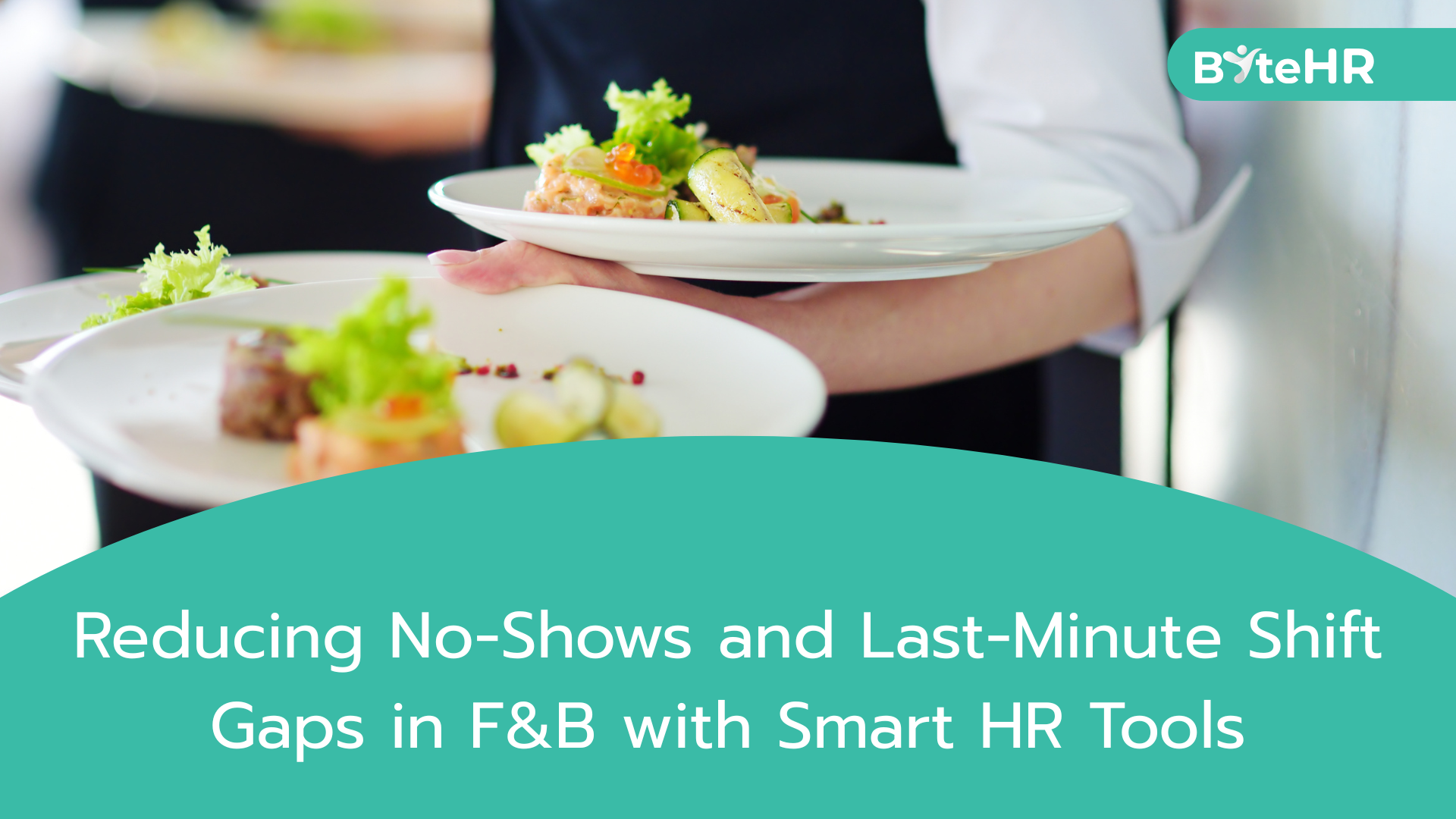
Anyone who has managed a restaurant, cafe, or F&B outlet in Malaysia knows the feeling. It's a Friday dinner rush, the queue is out the door, and one of your servers just messaged to say they can't make it in. No warning, no backup plan, just a scramble to cover the gap while guests wait longer than they should, and the rest of the team absorbs the extra pressure.
No-shows and last-minute shift gaps aren't rare exceptions in F&B; they're a near-constant operational reality. Malaysia's food and beverage sector relies heavily on part-time staff, casual workers, and young employees juggling multiple commitments, which makes scheduling inherently fragile. But while no-shows can never be eliminated entirely, the frequency and impact can be dramatically reduced with the right HR tools and processes. This article looks at why gaps happen so often in F&B, and how smart HR software helps outlets stay fully staffed even when plans fall apart.
Why No-Shows Happen So Often in F&B
Before fixing the problem, it helps to understand why it's so common in this industry specifically. A few factors make F&B particularly vulnerable to staffing gaps.
High reliance on part-time and casual labor. Many F&B outlets in Malaysia run on a mix of full-time staff and part-timers, including students and workers holding a second job. Part-time staff naturally have more competing priorities and less attachment to any single schedule, which increases the likelihood of last-minute cancellations.
Manual, inflexible scheduling. When rosters are built in spreadsheets or shared as static images in a WhatsApp group, there's no easy way for staff to swap shifts, flag conflicts early, or request coverage without going through a manager first. This friction means small scheduling conflicts often turn into full no-shows because there was no simple way to resolve them earlier.
Poor visibility into availability. Without a system that tracks who is available on which days, managers frequently schedule staff who already have known conflicts, only discovering the problem the day of the shift.
Low advance notice culture. In outlets without clear policies or consequences around attendance, staff may not feel a strong obligation to give advance notice when they can't make a shift, especially if there's no easy channel to communicate it properly.
Burnout and disengagement. F&B work is physically demanding, and inconsistent scheduling itself can contribute to staff disengagement, creating a cycle where poor scheduling leads to no-shows, which leads to more scheduling pressure on remaining staff, which leads to further turnover.
The Real Cost of an Unfilled Shift
It's easy to underestimate how expensive a single no-show actually is. Beyond the immediate scramble, unfilled shifts create a chain of costs.
Service quality drops when remaining staff are stretched across more tables or stations than they can comfortably handle, leading to slower service, more mistakes, and a worse guest experience during exactly the busy periods when first impressions matter most. Remaining staff also bear the burden directly, often working harder or longer to cover the gap, which increases fatigue and resentment and raises the risk of them eventually leaving, too. Managers lose valuable time firefighting instead of focusing on service quality, training, or business growth, since every no-show typically means an urgent round of calls and messages trying to find last-minute coverage. And overtime costs increase, since covering a gap often means asking someone already on shift to stay longer, at a higher pay rate under Malaysian overtime rules.
For multi-outlet F&B businesses, these costs compound across every location, every shift, every week.
How Smart HR Tools Reduce No-Shows and Fill Gaps Faster
Modern HR software doesn't eliminate human unpredictability, but it removes most of the friction that turns a minor scheduling issue into a full staffing crisis. Here's how.
Mobile schedule access with real-time notifications. When staff can view their schedule on their phone and receive automatic reminders ahead of each shift, the number of unintentional no-shows, people simply forgetting or misreading a schedule, drops significantly. A simple reminder sent a day and a few hours before a shift closes a surprising number of gaps before they happen.
Shift swap and cover request features. Instead of a staff member simply not showing up when a conflict arises, a good system lets them request a swap or post an open shift that qualified colleagues can pick up, with manager approval built into the workflow. This turns a potential no-show into a managed handover, often resolved days in advance instead of hours before service.
Centralized availability tracking. When every staff member's availability, approved leave, and existing commitments are stored in one system, managers can build schedules that already account for known constraints, dramatically reducing the number of conflicts that surface only on the day itself.
A pool of on-call or cross-trained staff. Some HR platforms allow managers to flag certain staff as available for last-minute cover across multiple outlets or roles. When a gap does occur, managers can instantly see who is eligible and available, rather than manually calling down a list.
Attendance pattern tracking. Smart HR tools can flag employees with recurring attendance issues early, giving managers the chance to have a supportive conversation or adjust scheduling before the pattern escalates into a larger staffing problem.
Faster, more transparent onboarding for casual staff. Since F&B businesses frequently bring in extra part-time staff during peak periods or to backfill gaps, having a system that allows quick onboarding, digital contracts, and immediate schedule access means new hires can be slotted in and made productive almost immediately.
Building a Culture That Supports the System
Technology alone won't solve staffing gaps if it isn't paired with clear expectations. The most successful F&B operators in Malaysia combine smart HR tools with simple, consistently enforced policies, like requiring advance notice for cancellations wherever possible, recognizing staff who reliably pick up open shifts, and using attendance data transparently rather than punitively. When staff feel that the scheduling system works in their favor too, giving them flexibility and easy communication rather than just rigid control, they're generally more inclined to use it properly and give advance notice when problems arise.
Turning a Persistent Problem into a Manageable One
No-shows and last-minute gaps will likely never disappear entirely in an industry built on part-time and shift-based labor. But the difference between an outlet that's constantly in crisis mode and one that handles disruptions smoothly usually comes down to the systems in place. Malaysian F&B businesses that invest in proper scheduling and HR tools consistently report fewer last-minute surprises, faster gap resolution when they do occur, and less strain on both managers and staff.
If you are looking to simplify your compliance journey, look no further. Try ByteHR demo free today and see how much lighter your HR team's workload can be. For a more tailored experience, feel free to reach out to our team at sales@byte-hr.com for a free consultation. Let us handle the complexities of payroll compliance so that you can focus on growing your business.