

Attendance Requirements for Factory Shift Teams

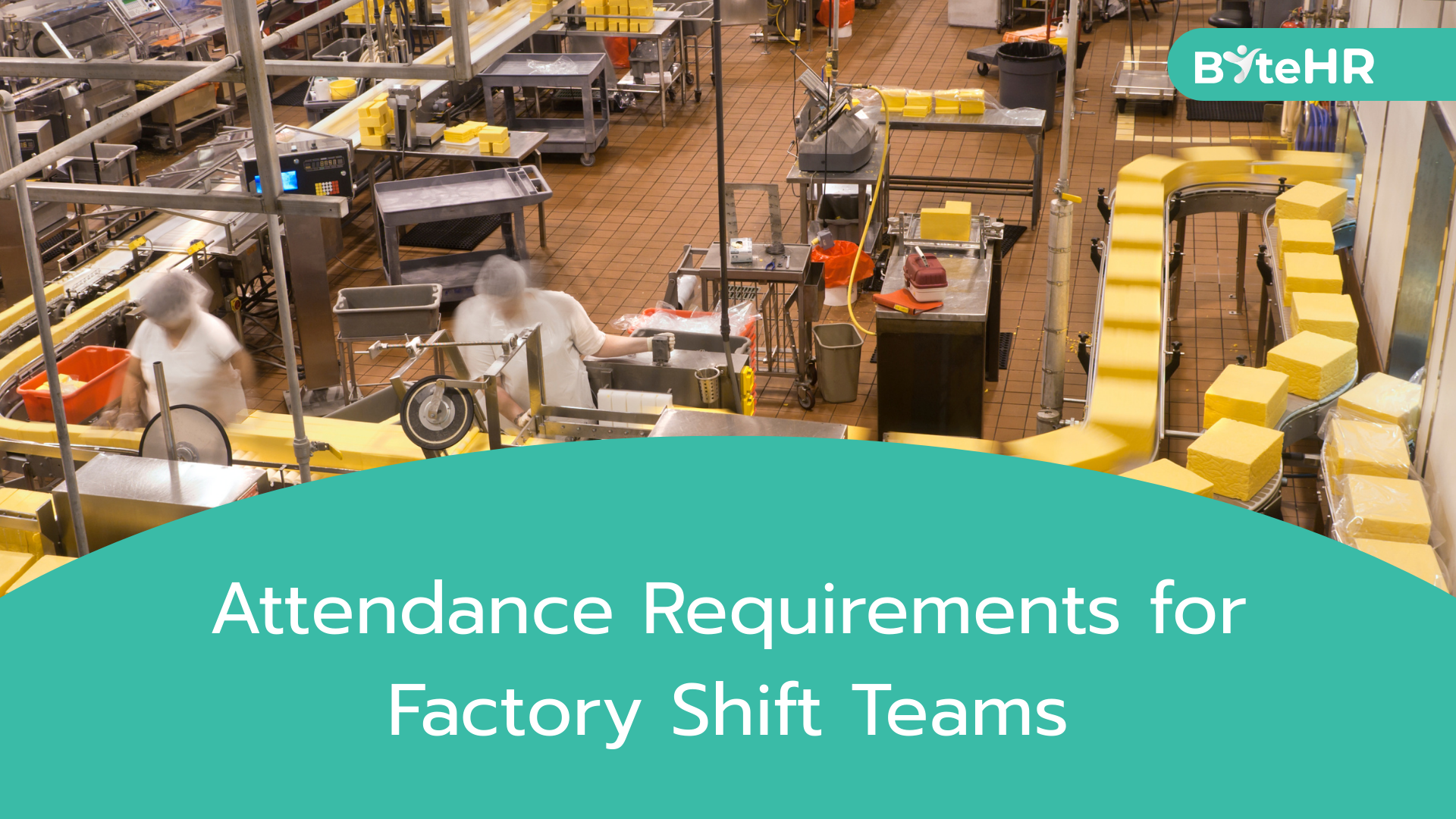
Running a factory around the clock is no small feat. Whether you operate a traditional three-shift rotation (morning, afternoon, and night) or a compressed 12-hour two-shift model, one thing remains constant: precision. A single missed handover, an untracked absence, or an incorrectly calculated overtime hour can ripple across the entire production line, causing delays, compliance issues, and rising labour costs.
Yet despite these stakes, many factories still rely on outdated methods to manage their most critical resource; their people. Paper sign-in sheets, disconnected spreadsheets, and manual OT tallying are not just inefficient; they are actively costing businesses time and money. In today's competitive manufacturing environment, a robust time and attendance system is no longer a nice-to-have. It is a foundational requirement for operational excellence.
The Challenges of Manual Employee Shift Scheduling
Ask any HR manager or production supervisor in a manufacturing facility about their biggest headaches, and employee shift scheduling will almost always top the list. The reasons are straightforward: factory environments are dynamic, high-pressure, and unforgiving of errors.
Spreadsheets Simply Cannot Keep Up
Traditional tools like Excel may work for small teams with fixed schedules, but they fall apart quickly when applied to complex rotating shift patterns. When you factor in multiple lines, varying headcounts per shift, skills-based assignments, and last-minute replacements, the spreadsheet becomes a liability rather than a tool. Data becomes outdated the moment it's entered, and there is no automatic way to flag conflicts or coverage gaps in real time.
Rotating Shifts Create Cascading Complexity
A rotating shift schedule introduces layers of complexity that compound over time. Employees move from morning to afternoon to night shifts on a weekly or bi-weekly cycle. Each rotation must account for:
Minimum rest periods between shifts to comply with labour law
Overtime thresholds that reset differently across shift boundaries
Night shift premiums that must be correctly attributed to the right pay period
Public holiday overlaps where a night shift may straddle two calendar dates, requiring split calculations
Miss any one of these details and you are looking at payroll errors, employee grievances, or worse, labor law violations.
Last-Minute Absences and No-Shows
In manufacturing, an unexpected absence on the factory floor is not just an HR problem; it is a production problem. Without a real-time attendance management system, floor supervisors have no immediate visibility into who has checked in and who hasn't. By the time the information reaches HR, valuable production time has already been lost. Finding the best way to schedule employee shifts means building a system that can flag gaps immediately and facilitate rapid replacement before the shift begins.
Benefits of Time Attendance Software
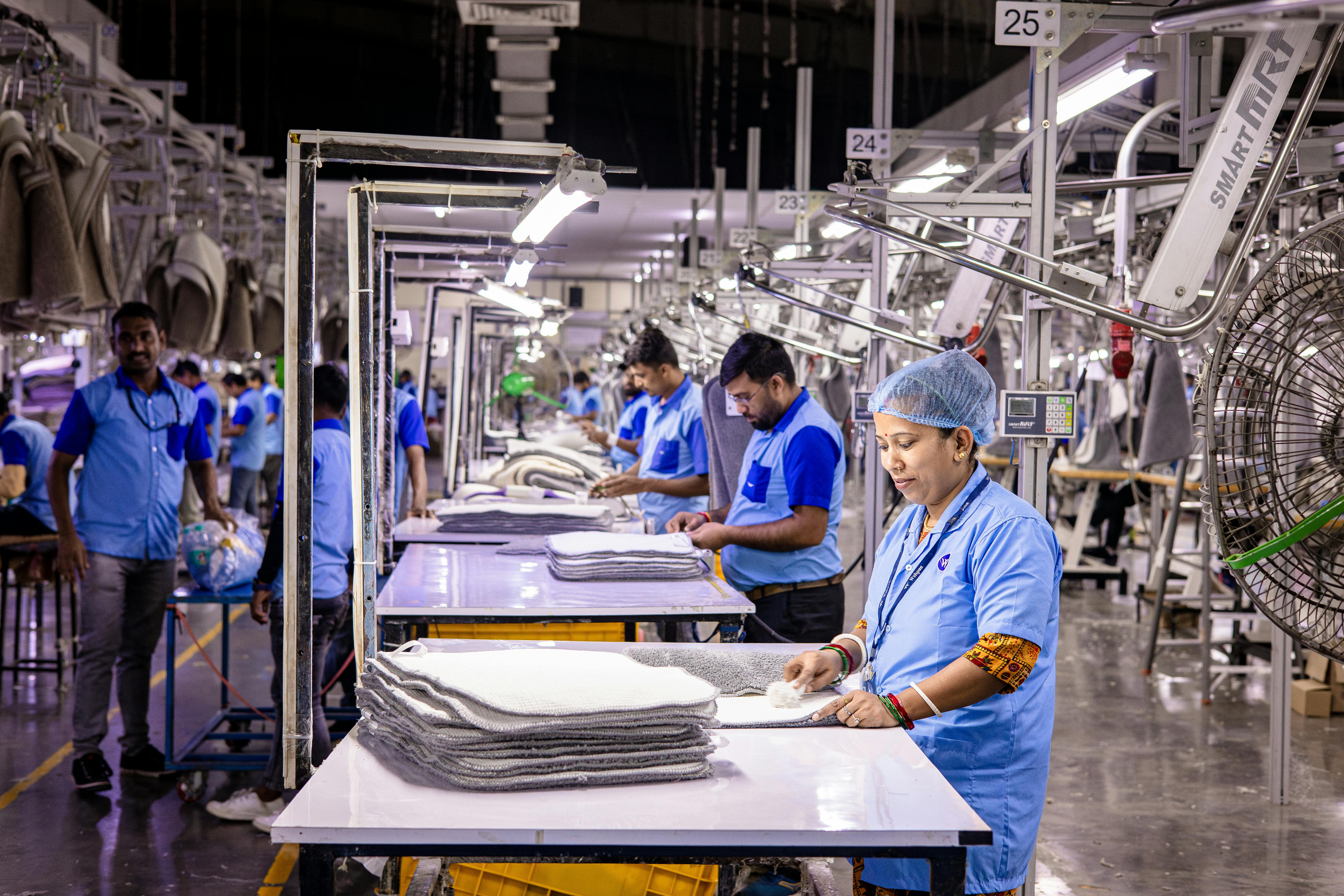
When factories upgrade from manual processes to dedicated time attendance software, the impact is felt almost immediately — not just in HR, but across the entire operation.
Real-Time Data That Actually Reflects Reality
Modern time attendance management software captures clock-in and clock-out data the moment it happens. Whether employees are using biometric fingerprint scanners, facial recognition terminals, or mobile GPS check-ins, the data syncs instantly to a central dashboard. Floor managers can see at a glance who is present, who is late, and who is absent; all without making a single phone call or walking the floor.
This real-time visibility is especially valuable for multi-line or multi-building factory setups where supervisors physically cannot monitor every entry point simultaneously.
Biometric Integration Eliminates Buddy Punching
One of the most significant cost leakages in factory attendance is "buddy punching"; where one employee clocks in on behalf of another. In a large facility with hundreds of workers, even a small percentage of fraudulent clock-ins adds up to substantial payroll waste. Biometric integration within a shift management system makes this practice virtually impossible, ensuring that the person clocking in is the person actually on the floor.
Mobile Accessibility for Supervisors on the Move
Factory supervisors are rarely sitting at a desk. The best time and attendance systems offer mobile applications that allow team leaders to approve shift swaps, acknowledge absences, and view real-time attendance data from anywhere on the floor. This mobility bridges the gap between HR and operations, ensuring that information flows without bottlenecks.
Streamlined Communication Between HR and the Factory Floor
An integrated attendance management system does more than track time; it connects people. When an employee requests a shift swap, the request flows automatically to the supervisor for approval and then updates the master schedule in real time. When overtime is pre-approved, it is automatically flagged for payroll processing. Nothing falls through the cracks because the system handles the communication layer that humans often miss.
Implementing a Shift Management System
Understanding the benefits is one thing, knowing the measurable return on investment is another. For factory operations managers and HR directors making the business case for a digital upgrade, the numbers tell a compelling story.
Reducing Administrative Overhead
HR teams in manufacturing facilities often spend an enormous portion of their working hours simply compiling and verifying attendance data before payroll runs. With employee shift management software in place, this process is largely automated. Attendance records are verified against scheduled shifts, exceptions are flagged for review, and approved data flows directly into payroll calculations. What used to take days now takes hours or less.
Preventing Ghost Shifts
"Ghost shifts" are shifts that appear on paper but were never actually worked. These are a real problem in facilities with manual oversight. An automated employee shift scheduling system with biometric verification ensures that every shift on the payroll record corresponds to a real, verified attendance event. This alone can represent significant cost savings for larger operations.
Using Attendance Data for Smarter Decision-Making
Perhaps the most underutilized benefit of modern time attendance management software is its analytical capability. Over time, the system builds a rich dataset of attendance patterns that HR and operations teams can use to:
Identify chronic tardiness before it becomes a disciplinary issue
Spot shift patterns that lead to higher absenteeism (such as the Monday after a night shift rotation)
Forecast staffing needs based on historical attendance data during peak production periods
Benchmark compliance with overtime regulations across departments or production lines
This shift from reactive management to proactive, data-driven decision-making is where the real long-term value lies. Instead of firefighting attendance issues at the end of the month, managers can intervene early and adjust schedules before problems escalate.
Ensuring Labour Law Compliance
Regulatory compliance is a non-negotiable concern for any manufacturing operation. The right shift management system keeps detailed, tamper-proof records of every clock-in, clock-out, break period, and overtime calculation. Should your facility ever face a labour audit or employee dispute, having accurate, system-generated records is an invaluable safeguard.

Managing attendance for factory shift teams is genuinely complex. Between rotating schedules, overnight shifts, overtime calculations, and the constant challenge of last-minute absences, the margin for error is razor-thin and the cost of getting it wrong is high.
The good news is that the right technology makes all of this manageable. A purpose-built time and attendance system; one that integrates biometric verification, real-time dashboards, mobile access, and payroll connectivity; transforms attendance management from a daily struggle into a streamlined, reliable process. It protects your business from compliance risk, reduces payroll errors, and gives your supervisors the visibility they need to keep production running smoothly.
If your factory is still relying on spreadsheets or disconnected punch-card systems to manage shift attendance, the question is not whether you should upgrade. It is how soon you can afford not to.
ByteHR is ideal for organizations seeking simplicity, excellent customer service, and user-friendly functionality. Contact ByteHR today for consultation on digital employment contract management systems and HR solutions that will elevate your human resource management into the digital age.
Want to follow articles about taxes, tips for employees and entrepreneurs, and human resource development? Visit ByteHR. If you're considering an HR program but aren't sure where to start, or whether the features will meet your company's needs, consult with ByteHR for free at 02 026 3297 or email sales@byte-hr.com