


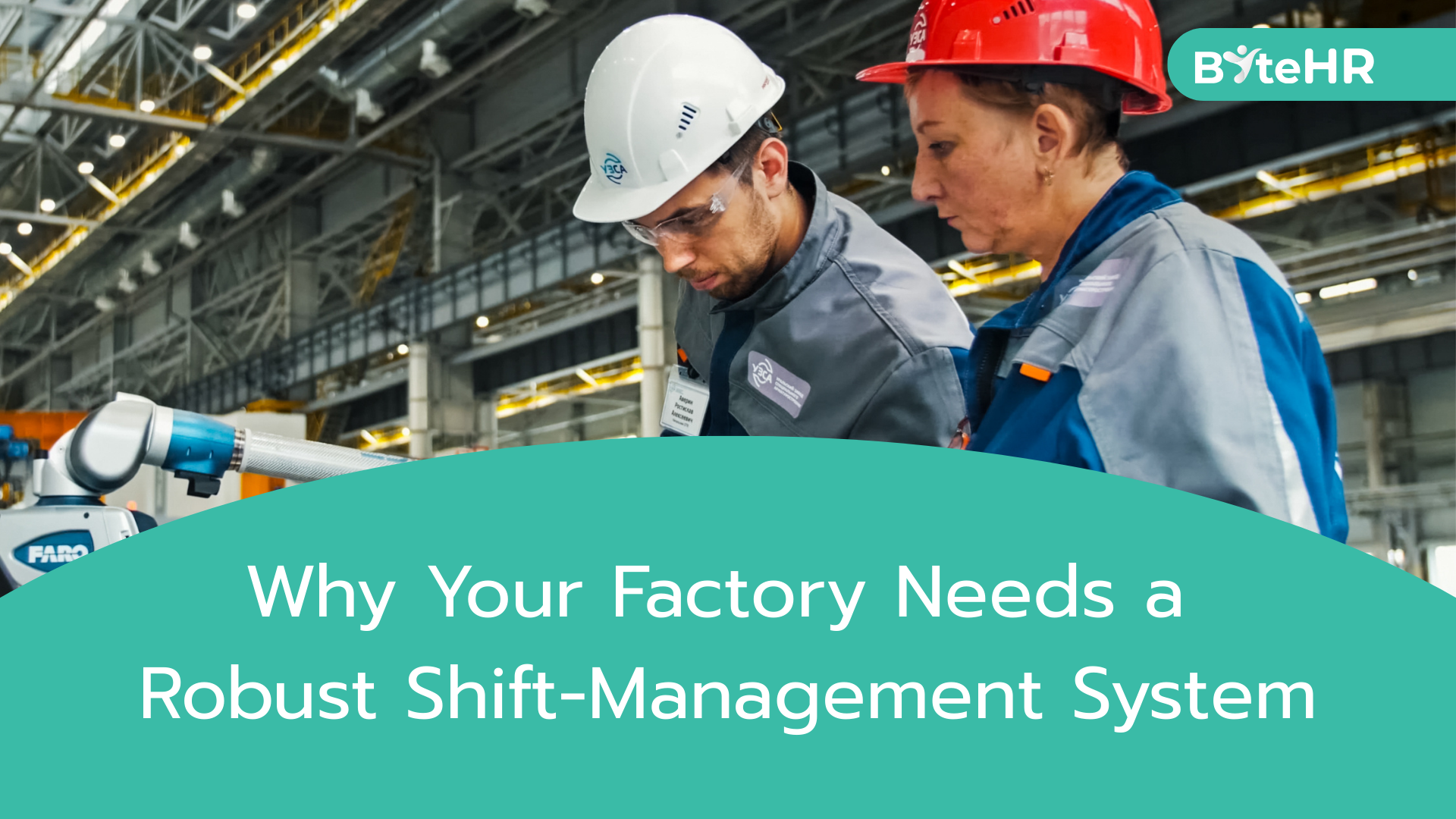
Why Your Factory Needs a Robust Shift-Management System

In manufacturing, every minute counts. When production lines run around the clock across multiple shifts, even small inefficiencies compound rapidly. A miscommunicated handover leads to machine downtime. An absent worker without a replacement slows the entire line. An incorrectly calculated overtime payment creates employee dissatisfaction that lingers for weeks.
Yet despite these high stakes, many factories still rely on outdated methods to manage their workforce. Paper rosters, WhatsApp shift swaps, Excel spreadsheets, and manual headcount checks were perhaps workable when operations were smaller and simpler. But as factories scale, diversify product lines, and face tighter margins, these manual approaches become liabilities rather than solutions.
A robust shift-management system is no longer a luxury for forward-thinking manufacturers. It is a fundamental requirement for operational reliability, cost control, and workforce stability. Here's why.
The Hidden Costs of Manual Shift Management
The true cost of managing shifts manually goes far beyond the hours spent compiling spreadsheets. It manifests in ways that are harder to quantify but deeply impactful to the bottom line.
Payroll Errors That Erode Trust
Manual calculation of overtime, shift premiums, and allowances is inherently prone to error. When an employee's paycheck doesn't match their expectations, even if the discrepancy is minor, it damages trust. Over time, these errors accumulate into a broader morale problem. Employees begin to question whether they're being compensated fairly, and turnover rates rise as a result.
In a competitive labor market, losing skilled machine operators or experienced line supervisors is expensive. The cost of recruiting, onboarding, and training replacements often far exceeds the cost of implementing a system that ensures accurate, transparent payroll from the start.
Production Delays Due to Staffing Gaps
When supervisors discover at the start of a shift that they're short-staffed, it's already too late. Manual systems provide no advance warning. There's no real-time visibility into who has confirmed their shift, who has requested leave, or who might not show up. By the time the gap is identified, production has already been impacted.
A shift-management system flags potential staffing shortfalls days in advance, giving managers time to arrange coverage, approve overtime, or bring in temporary workers. This proactive approach prevents disruptions rather than reacting to them after damage is done.
Compliance Risks That Lead to Penalties
Labor regulations around working hours, rest periods, and overtime limits are strict and enforceable. Factories that fail to maintain accurate records of employee attendance and working hours expose themselves to significant legal and financial risk. During audits or labor disputes, incomplete or inconsistent documentation can result in penalties that dwarf the cost of a proper management system.
Digital shift-management platforms maintain tamper-proof records of every clock-in, clock-out, break period, and shift change. These records are comprehensive, timestamped, and easily retrievable, exactly what regulators and auditors require.

What a Robust Shift-Management System Actually Does
Understanding the problem is only half the equation. The other half is understanding what a proper solution looks like in practice.
Automates Schedule Creation and Distribution
Creating a balanced shift schedule that respects labor laws, accounts for employee preferences, and ensures adequate coverage is time-consuming when done manually. A shift-management system automates much of this process. It can generate schedules based on production forecasts, apply rotation rules automatically, and instantly notify employees of their upcoming shifts via mobile app or SMS.
When changes are necessary, and they always are, the system updates the schedule in real time and alerts affected employees immediately. No more phone tag. No more miscommunication.
Tracks Attendance in Real Time
Modern systems integrate with biometric devices, RFID badges, or GPS-enabled mobile apps to capture attendance data the moment it happens. Supervisors can see at a glance who is present, who is late, and who hasn't checked in. This real-time visibility is especially critical in large facilities with multiple production lines or buildings where physical oversight is impossible.
Real-time tracking also eliminates "buddy punching", the practice of one employee clocking in on behalf of another. Biometric verification ensures that the person on the floor is the person being paid.
Calculates Payroll Automatically
Perhaps the most immediate benefit of a shift-management system is the elimination of manual payroll calculations. The system automatically calculates regular hours, overtime, night shift premiums, public holiday rates, and any other compensation elements based on pre-configured rules. The data flows directly into payroll processing, dramatically reducing errors and administrative workload.
For HR teams that previously spent days each month reconciling attendance records and preparing payroll, the time savings alone justify the investment.
Provides Analytics for Smarter Decisions
Beyond daily operations, shift-management systems generate valuable data over time. Which shifts consistently experience higher absenteeism? Which employees frequently arrive late? Which production lines require more overtime than budgeted? These insights allow managers to address root causes rather than simply reacting to symptoms.
Predictive analytics can even forecast future staffing needs based on historical attendance patterns and production schedules, enabling proactive workforce planning rather than constant firefighting.
The ROI of Investing in Shift Management
Cost is often cited as a barrier to adopting new systems. But when weighed against the hidden costs of manual management, the return on investment becomes clear remarkably quickly.
Reduced Administrative Overhead
HR teams spend significantly less time on manual data entry, schedule adjustments, and payroll reconciliation. This freed-up time can be redirected toward higher-value activities like employee development, recruitment, and retention initiatives.
Lower Turnover Through Fairness and Transparency
When employees trust that their hours are being tracked accurately and their pay is calculated fairly, job satisfaction improves. Transparent shift scheduling that allows employees to see their upcoming rosters and request changes through a self-service portal gives them greater control over their work-life balance. Both factors contribute to lower turnover rates.
Improved Compliance and Reduced Risk
Automated record-keeping ensures that factories remain compliant with labor regulations at all times. During audits, comprehensive digital records provide immediate proof of compliance, reducing legal exposure and avoiding costly penalties.
Better Production Efficiency
With staffing gaps identified and resolved proactively, production lines run more smoothly. Supervisors spend less time managing attendance crises and more time focusing on quality, safety, and continuous improvement.
Choosing the Right System for Your Factory
Not all shift-management systems are created equal, and selecting the right one requires careful consideration of your specific operational needs.
- Look for scalability. If you plan to add production lines or open new facilities, the system should scale with you without requiring a complete overhaul.
- Ensure integration. The shift-management system should integrate seamlessly with your existing payroll, HR, and ERP platforms. Data should flow automatically between systems without manual transfers.
- Prioritize usability. Floor supervisors and line managers need to be able to use the system without extensive training. If the interface is too complex, adoption will be slow and resistance will be high.
- Demand strong support.When issues arise, and they will, responsive technical support is essential. Look for vendors with proven track records in manufacturing environments who understand the urgency of operational.
The factories that thrive in an increasingly competitive manufacturing landscape are the ones that recognize workforce management as a strategic advantage, not just an administrative necessity. A robust shift-management system doesn't just prevent problems, it creates opportunities for optimization, efficiency, and growth.
The question is not whether your factory can afford to implement such a system. The question is whether you can afford not to.
If you're running a business in Malaysia, choosing the right HR software in 2026 is critical. The investment in effective employee management pays dividends through improved performance, higher retention, and sustainable business growth.
For more on HR development, tax knowledge, and tips for employees and entrepreneurs, follow ByteHR. If you're considering HR software, contact ByteHR for a free consultation at 036 419 5276 or salesmy@byte-hr.com.